
Overview
Features of the Walking Tour: A Journey Through Koblenz's Rich History
Embark on an immersive experience as you explore Koblenz, recognized as one of Germany's oldest cities. This private guided walking tour offers a unique opportunity to delve into over 2,000 years of history, from its origins as a Roman settlement to its current status as a vibrant metropolis. Along the way, you will have the chance to admire the remarkable Basilica of St. Castor, an integral part of the UNESCO World Heritage Site of the Upper Middle Rhine Valley. The knowledgeable local guide will share fascinating stories and lesser-known anecdotes that bring life to the cobbled streets and historic landmarks.
Tour Itinerary: From Deutsches Eck to Exquisite Cultural Landmarks
The tour begins at Deutsches Eck (German Corner), where the confluence of the Rhine and Moselle rivers creates a stunning backdrop. You will meander through the charming streets, stopping to observe:
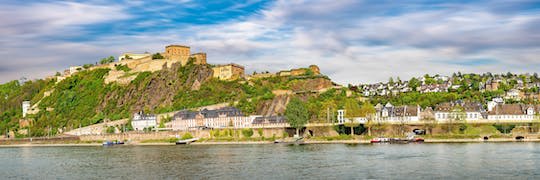
- The grand equestrian statue of German Emperor Wilhelm I, which offers panoramic views of Fortress Ehrenbreitstein, perched majestically above the Rhine.
- The Church of Our Dear Lady (Liebfrauenkirche), a significant historical site that provides insight into the city's religious heritage.
- Münzplatz, where you will explore the history of German currency in a delightful atmosphere enriched by its surroundings.
The journey culminates with a visit to the memorial site of the Four Towers, remarkable structures built in 1608 that showcase splendid architectural features.
Tour Details: Inclusions and Important Notes
This carefully curated experience includes the following:
- A guided walking tour led by a local expert with extensive knowledge of Koblenz's history.
- Access to notable landmarks and hidden gems not typically covered in standard guidebooks.
However, the following items are not included in the tour:
- Meals or snacks, although there may be stops for refreshments.
Important considerations for participants include:
- This activity is designed to accommodate wheelchair users and individuals with mobility impairments.
- Weather conditions can vary; thus, appropriate dress is advised to ensure comfort during the tour.
Key Points to Know Before Joining: Preparation for an Enriching Experience
To make the most of your walking tour in Koblenz, participants are encouraged to consider the following preparations:
- Wear comfortable footwear suitable for walking on various terrains.
- Bringing a water bottle is advisable, especially on warmer days to stay hydrated.
- Note that the tour may include both well-trodden paths and less frequented alleys, allowing for a diverse exploration of the city.
This experience is crafted for small groups, fostering a friendly atmosphere where questions and engagement are welcomed. Regardless of your level of travel experience, this tour promises to reveal the allure of Koblenz through a local lens.
Map
<div class="maps_inPage"><iframe src="https://www.google.com/maps/embed/v1/place?q=%E3%83%89%E3%82%A4%E3%83%84%2056%20%E3%82%B3%E3%83%96%E3%83%AC%E3%83%B3%E3%83%84&language=en&key=AIzaSyDSXnuFxE3B1oprM7fhXpI0Zj7dMr4BYtY" allowfullscreen></iframe></div>
Things to Do in the Area
A Historical Exploration of Rhineland-Palatinate
Rhineland-Palatinate is one of Germany's most enchanting regions, boasting a rich tapestry of history, culture, and breathtaking landscapes, especially along the picturesque Rhine and Moselle rivers.
- Koblenz: A city with over 2000 years of history that captivates visitors with its ancient roots as a Roman settlement. The confluence of the Rhine and Moselle rivers is marked by the iconic Deutsches Eck, featuring a striking monument of Emperor Wilhelm I. The Basilica of St. Castor, a designated UNESCO World Heritage Site, adds to the city's historical significance, along with the charm of its cobbled streets and vibrant squares.
- Mainz: Known as the birthplace of Johannes Gutenberg, Mainz is celebrated for its stunning cathedral and vibrant cultural scene. Walk along the scenic Rhine promenade, enjoy its charming old town, and delve into the local wine culture at nearby vineyards.
- Trier: Recognized as Germany's oldest city, Trier is famous for its well-preserved Roman architecture, including the Porta Nigra and the Roman Imperial Baths. This city invites travelers to explore its historical significance and rich traditions.
The Allure of Koblenz: Gateway to the Moselle Valley
Koblenz is a remarkable city where history and scenic beauty converge, offering visitors a chance to explore its rich heritage and stunning landscapes.
- Basilica of St. Castor: A major highlight in Koblenz, this church is an architectural marvel that has stood the test of time. Recognized for its historical importance, the basilica is a must-visit for anyone interested in religious architecture and history.
- Deutsches Eck: Located at the confluence of the Rhine and Moselle, this landmark is a picturesque spot complete with a grand equestrian statue of Emperor Wilhelm I, providing breathtaking views and a glimpse into Germany's imperial past.
- Fortress Ehrenbreitstein: Standing majestically on a hill, this fortress provides not only a historical insight into military architecture but also offers exceptional panoramic views of Koblenz and the surrounding rivers, making it an ideal location for photography and exploration.